

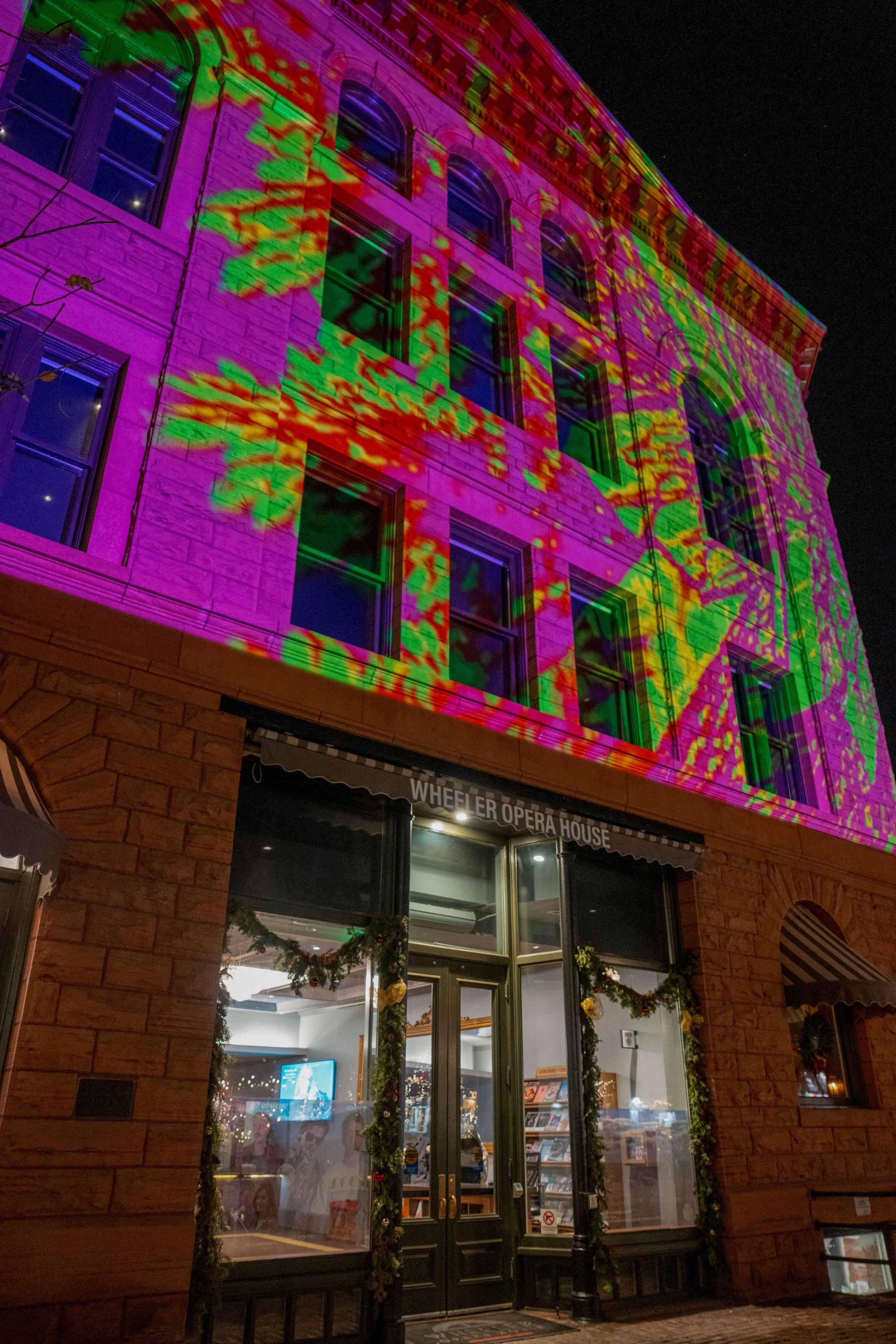
“When I project map a historic building, I'm not simply using it as a screen; I'm engaging in conversation with it.” LUCIA
LUCIA (Sara Grizzaffi) is a Denver-based new media artist and designer who works with projection, sensors, and custom software to create responsive environments of light and sound.
Her installations transform spaces into living experiences that shift and react with the presence of an audience.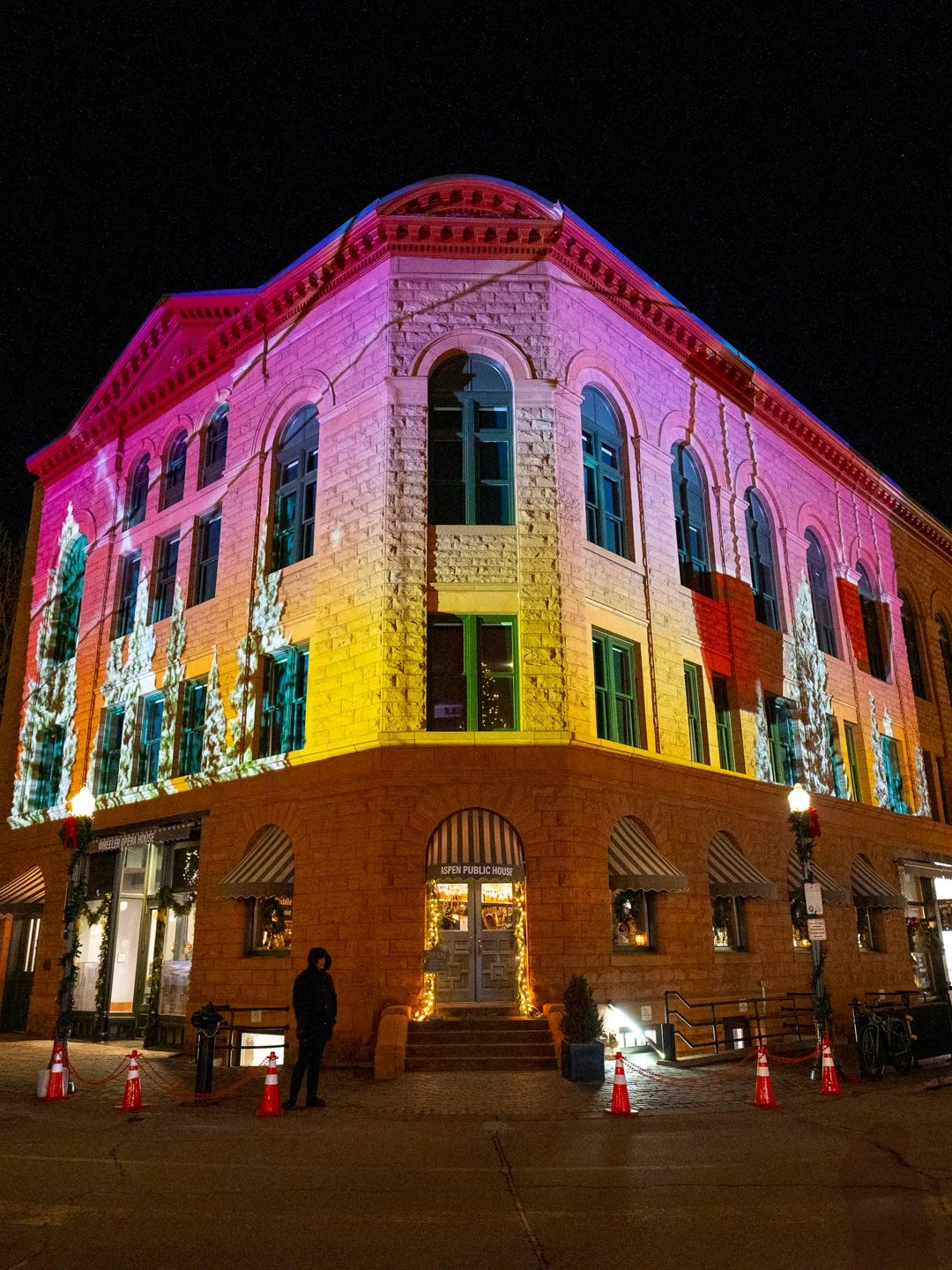
BPA:
How do you hope audiences experienced the work in the moment, especially as a shared public event?
LUCIA:
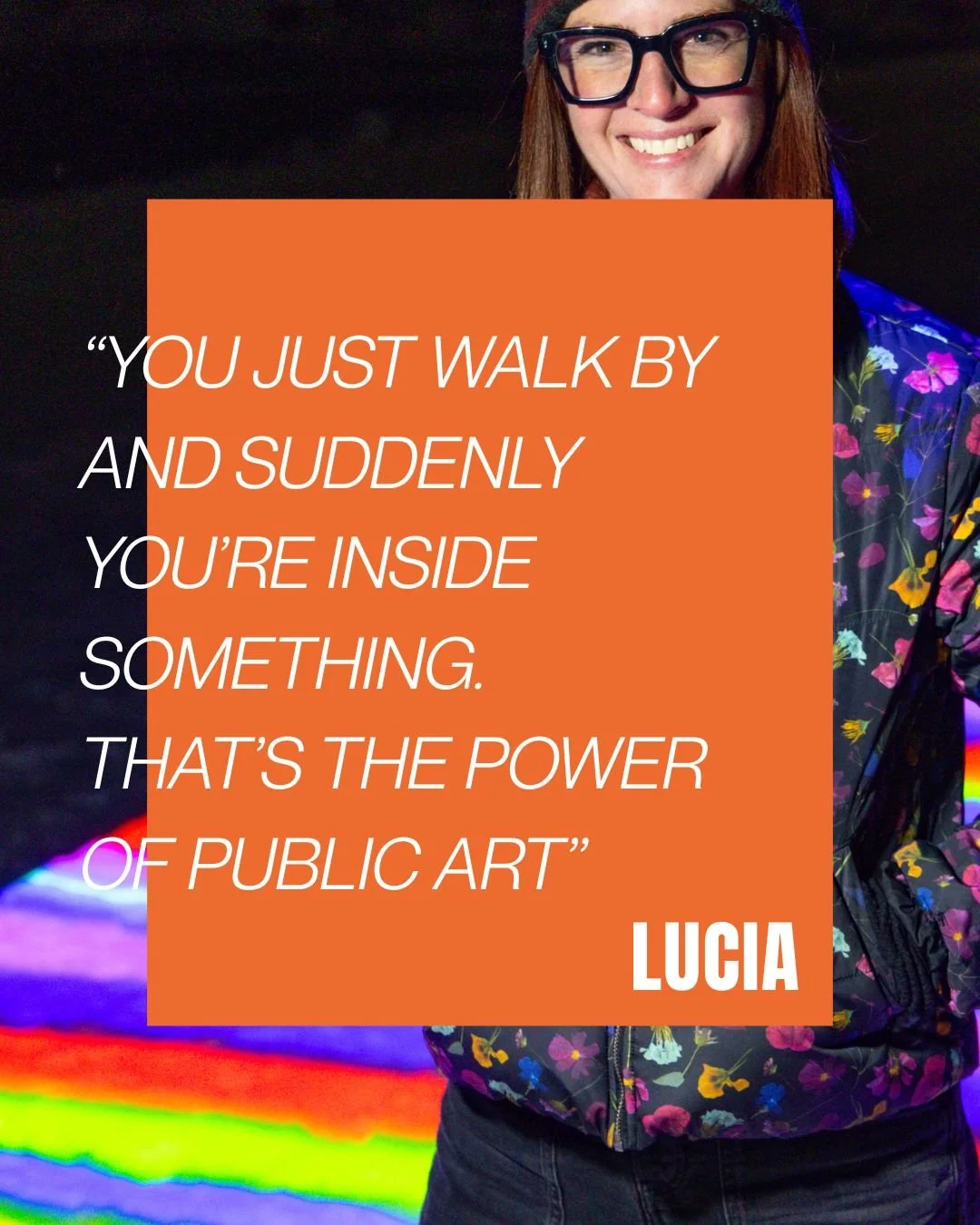
I hoped people felt something before they could quite explain what it was — wonder, and maybe a moment of recognition. As if the visuals were giving language to something they'd already felt but never seen reflected back at them. The seasonal arc is universal; everyone knows what it feels like to be in a hard winter and wonder if spring is coming. I wanted strangers standing on that street to feel taken on a journey through that story, and maybe a little less alone in whatever season they're currently carrying. And there's something specific about experiencing it together — strangers standing side by side, all inside the same moment. That shared witnessing is something you can't replicate in a gallery. That's what public art does that almost nothing else can — it doesn't ask anything of you. You don't buy a ticket, you don't seek it out. You just walk by and suddenly you're inside something. That's the power of it.
BPA:
What inspired Through + Through, and how did the history of the Wheeler Opera House influence your concept?
LUCIA:
The Wheeler Opera House was built in 1889 as a creative home for the community, nearly destroyed by fire in 1912, and — after decades of closure — restored into the landmark it is today. When I learned that, I saw life reflected in the story in a deep way — the seasons of hardship and growth that we all must move through. The idea that the only way through it is through it is something I believe deeply and have experienced firsthand. Growth often comes after periods of intense struggle or long isolation. In this way, the Wheeler's story is our story: to grow, we must be resilient. We must survive the fire.
BPA:
The work explores themes of resilience, fire, renewal, and seasonal cycles. Why these themes, and how did you translate them into light, color, and movement?
LUCIA:
There's a reason these themes keep showing up in my work; they are deeply personal. Becoming a new parent, navigating the isolation of motherhood during Covid, doing the hard internal work that seems to be required in midlife — that's all fire and winter in its own way. The truth is we can't skip the hard seasons — they're what changes us. Finding these same qualities in the Wheeler's story felt like an invitation to share work I connected to deeply. The visual language follows that same arc: warmth, then chaos, then stillness, then slow growth, then full bloom. The building becomes a body moving through its own seasons of life.
BPA:
How does working with a public art producer influence your creative process compared to other contexts?
LUCIA:
It raises the stakes in a way that sharpens everything. When you're accountable to a community, a historic site, and a producing partner, the work has to earn its place. It can't just be technically impressive, it has to mean something. That kind of accountability doesn't limit my creative freedom, if anything it focuses it. Buckhorn's deep knowledge of their community also shaped how I approached the work. Knowing that the audience already had a relationship with this building — that I wasn't introducing them to something unknown but celebrating something deeply loved — shifted my entire creative intention. It became less about awareness and more about honoring.
“…When the audience stops being passive and becomes part of the work itself. That feels like where the medium has the most room to grow.”
BPA:
How did your collaboration with Buckhorn Public Arts help shape or support the realization of this project?
LUCIA:
Tim Sack has been a genuine champion of my work for a while now. He's hired me in Denver previously and consistently puts my name in rooms I might not otherwise be in. That kind of advocacy matters enormously for an independent artist working alone. For Through + Through, Buckhorn provided the commission and the institutional access that made a project of this scale possible. Projecting onto a landmark like the Wheeler requires real relationships and trust. Buckhorn brought that. I brought the vision. It worked because both sides were fully committed.
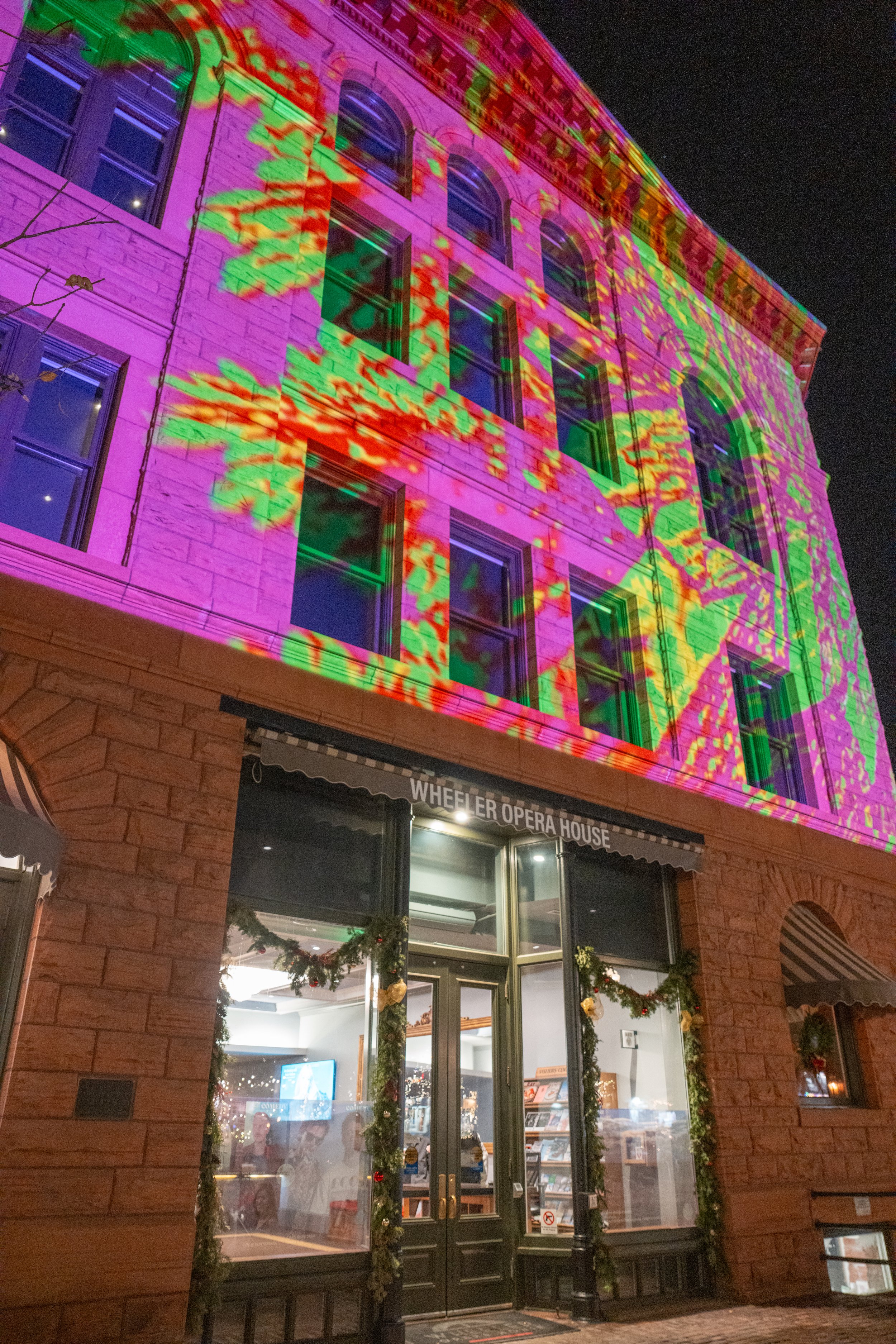
Through + Through
At the Wheeler Opera House.
Aspen, December, 2025