

“I believe the core of my work should be accessible to everyone, no matter the placement.” W.Boucher
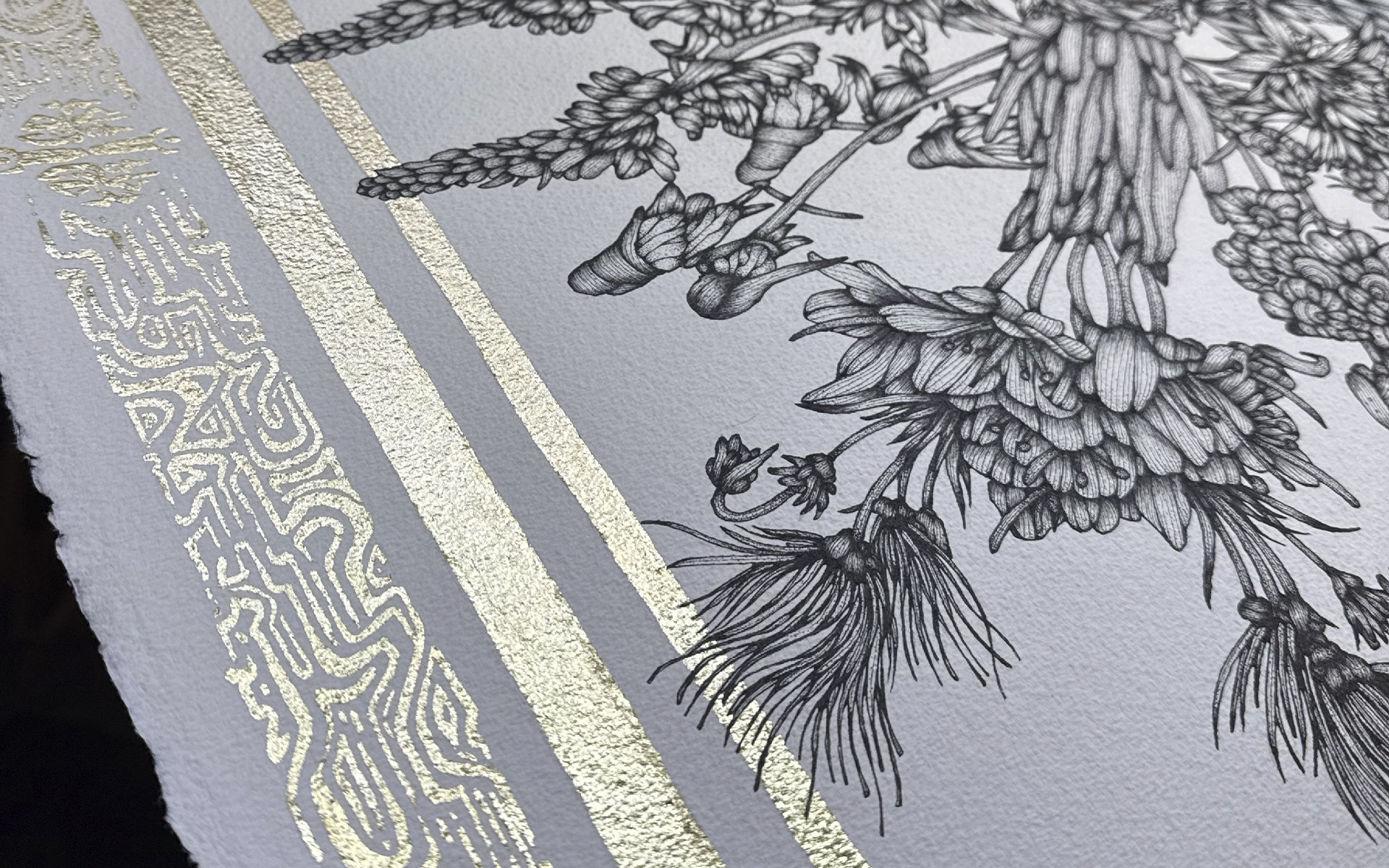
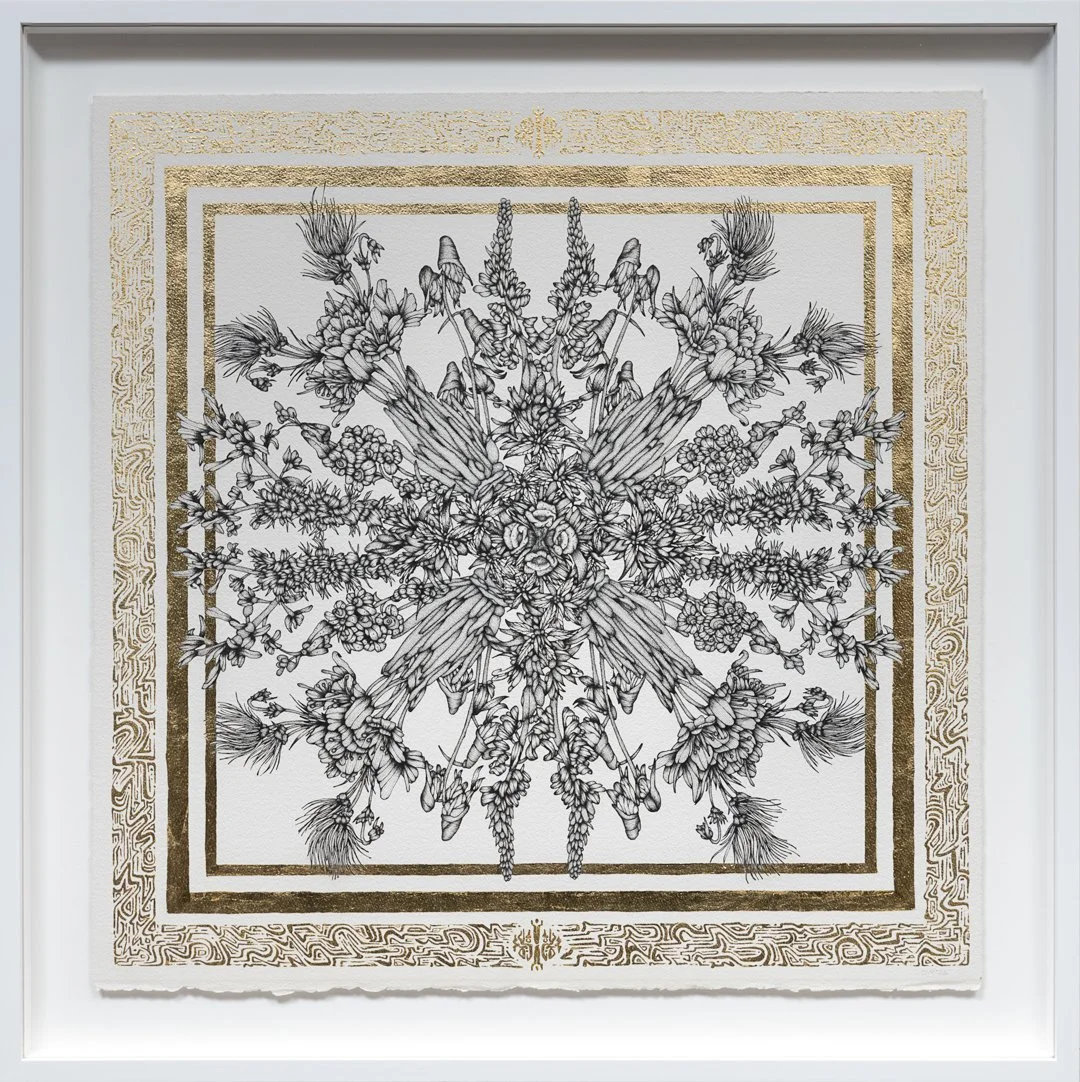
Whit Boucher is an artist based in Woody Creek, Colorado, whose work is rooted in a deep connection to the natural world and an ongoing inquiry into the energetic systems that connect all living beings. His practice seeks to make the unseen visible through hyper-detailed drawing and large-scale mural work, using repetition, observation, and devotion to process as central tools. Over the past two years, his work has evolved from acrylic paintings on found materials, such as metal and wood, into intricate pen-and-ink compositions.
BPA:
A serious knee injury in 2022 was the turning point that brought you fully into your artistic practice. What did that moment of stillness and recovery teach you about the work you needed to make?
BOUCHER:
This moment was the catalyst that changed everything. At the time, I was unhappy, questioning what I was doing and why it even mattered. In that forced stillness, I realized I had to be bold, take risks, and gamble on myself. Although walking away from the security of a steady paycheck was terrifying, I knew I couldn’t stay. I chose art. Beyond providing the motivation for the most significant shift of my life, this injury taught me a vital lesson through my work: self-reliance.
BPA:
Your work is described as making the unseen visible. What does that actually look like in practice, how do you recognise this? "I believe the core of my work should be accessible to everyone, no matter the placement."
BOUCHER:
My practice is a form of translation. I conjure the unseen through meditation in nature, seeking spaces where my perception is uninhibited by the constant distractions of life.
In these moments, I can more easily bridge the gap between my internal spiritual realm and the physical world, transcribing the vibrations of my sacred places into visible form.
BPA:
Your work contains hyper-detail, repetition, and devotion to process. Do you feel it as a meditative experience? And how does working at a mural scale change that?
BOUCHER:
My drawing process is a deeply meditative experience.
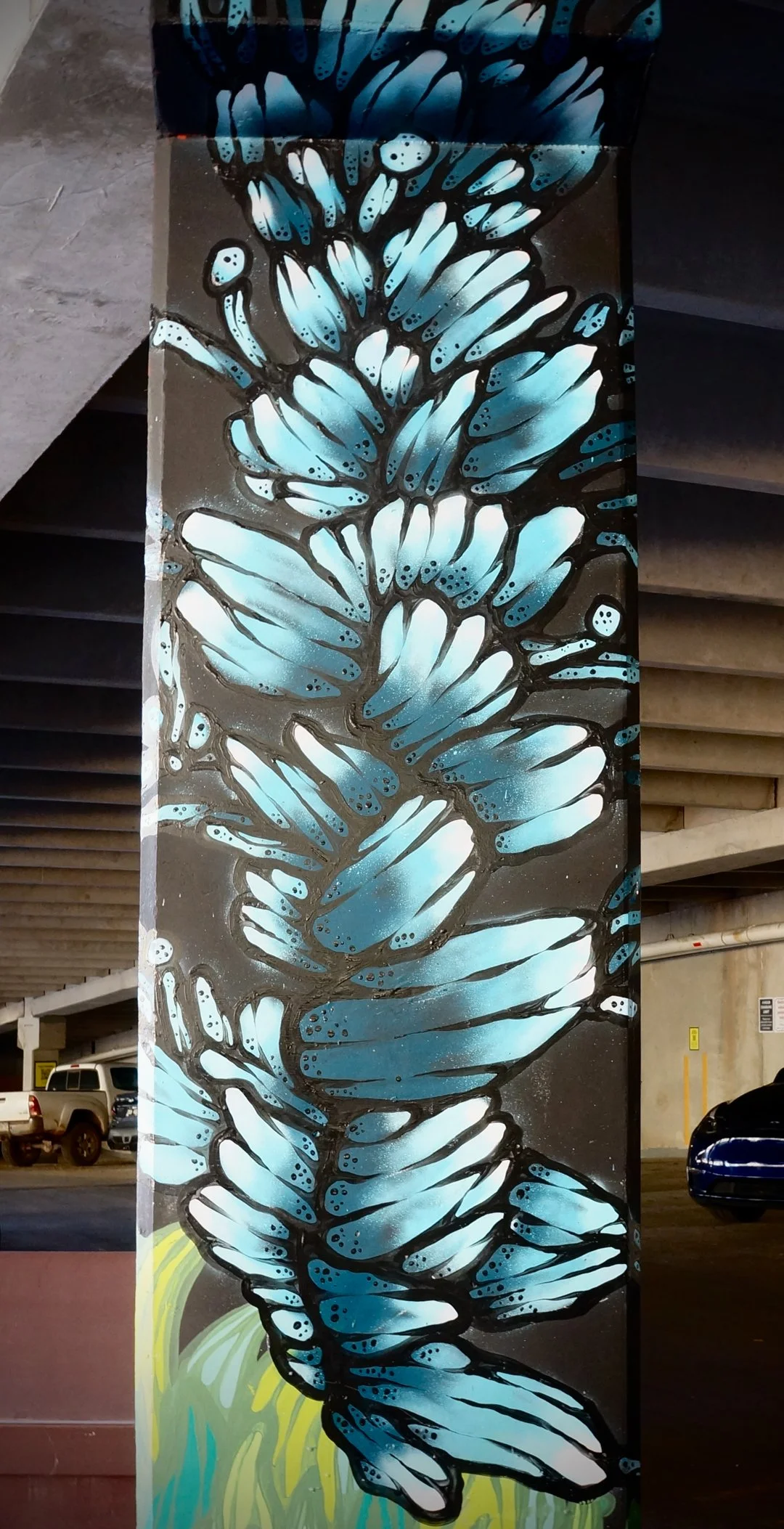
Working at mural scale, however, shifts this energy significantly. I love the slow, time-consuming practice of exploring form
and detail on paper, then using murals and digital work for
fast, expressive output. This allows me to pull elements I’ve spent months of mental bandwidth on and execute them quickly. This juxtaposition is vital; for me, mural work is
a gift born from the stillness of deep, meditative drawing.
“I want people to feel my deep connection to the natural world, allowing the work to reverberate through them — stirring gratitude, awe, and admiration for the incredible landscapes we are so fortunate to inhabit.”
BPA:
Public art asks something different of a piece than a gallery does. Do you think your work changes when it's out in the open? Does it breathe differently?
BOUCHER:
My messaging remains consistent across all platforms, from galleries to public spaces. I believe the core of my work should be accessible to everyone, no matter the placement. Moving forward, I want to put my energy into larger-scale public projects, as they provide the ideal environment for the deeper environmental and social messages I am now exploring.
BPA:
You write about sitting on the mountainside, feeling the cold air, the creaking trees. Is being physically in nature a necessary part of your process? How do you connect it to your art?
BOUCHER:
Immersion in the wild is essential to my work. Nature is not just my inspiration, but my motivation for creating. I connect my practice to the land by treating each work as an offering, a gesture of gratitude to the planet for everything it provides.
BPA:
Your artist statement talks about portals, thresholds through
which the spirit may enter unseen space. What do you mean by this?
BOUCHER:
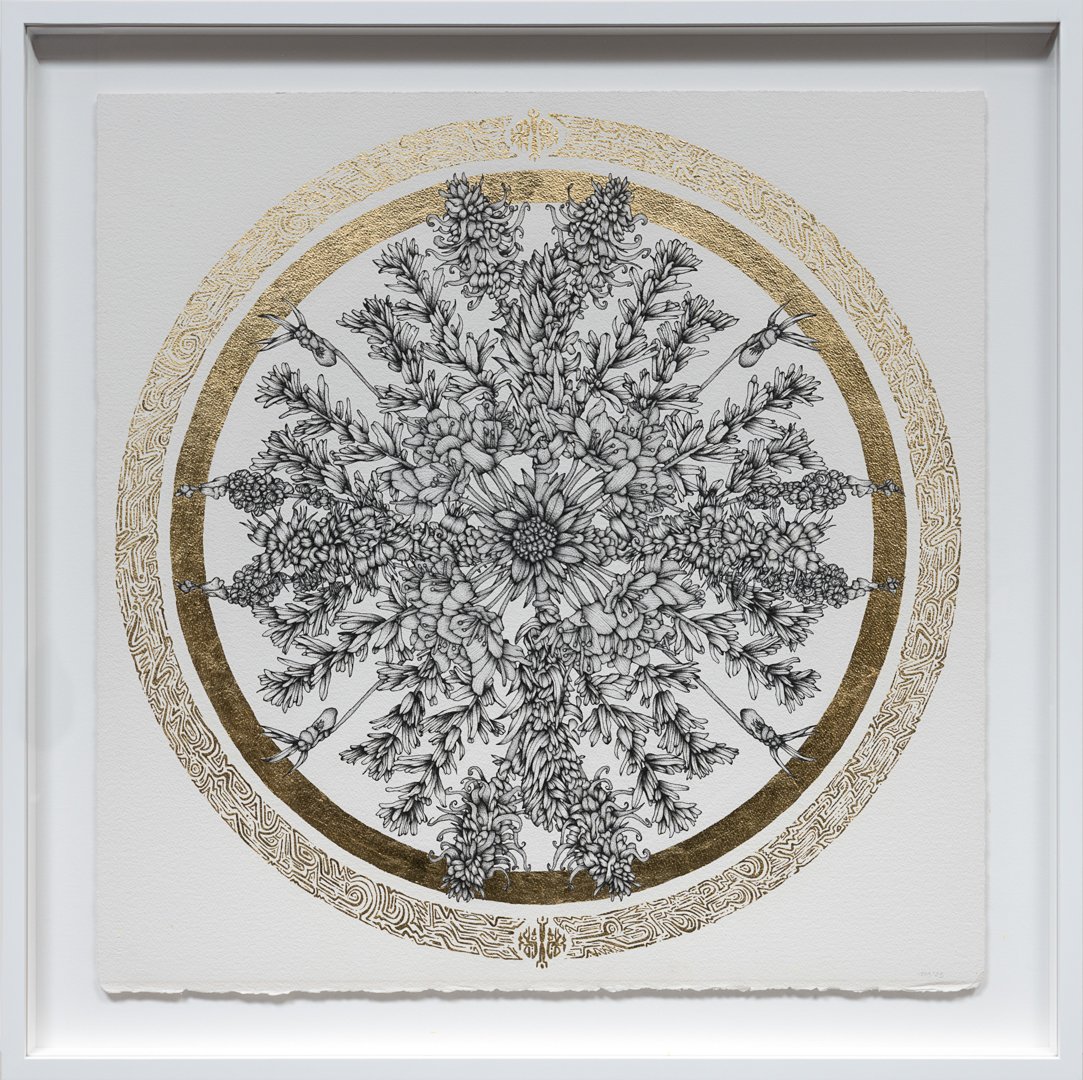
I’ve always been drawn to the way sacred places use symbols to mark where the 'veil becomes thin.' For my series The Sacred Gate, debuting at Intersect Aspen, I created three large-scale drawingYour artist statement talks about portals, thresholds through which the spirit may enter unseen space. What do you mean by this?s that serve as thresholds to my own quiet sanctuaries. These are the places where I feel free from the interference of everyday life and truly connected to the earth’s energy.
BPA:
You've moved from acrylic on found materials to intricate pen-and-ink, and now into gold leaf and ancient symbolic systems. Where do you feel your work is heading next?
BOUCHER:
My future practice centers on a return to origin. By hand-harvesting pigments and crafting my own paper, I am moving away from mindless consumption and toward a process of radical intentionality. I intend to leverage my work as a tool for advocacy, partnering with conservation groups to protect the wild lands that inspire my psyche and sustain my materials.
“I deeply appreciate the mission of Buckhorn Public Arts; they provide a vital platform for emerging local artists like myself to share our vision. I am incredibly grateful for this community and for the opportunities and connections fostered by organizations like BPA. ”
Video credits:
@tylerwilkinsonray